I Took the World's Strongest Antioxidant for 30 Days. 6 Things Nobody Tells You About the "Sunglow" Effect
Results may vary from person to person
"Are you sleeping okay?"
A coworker asked me that on a Tuesday morning. She meant it kindly. It still stung, because I had slept fine. My face just didn't show it anymore.
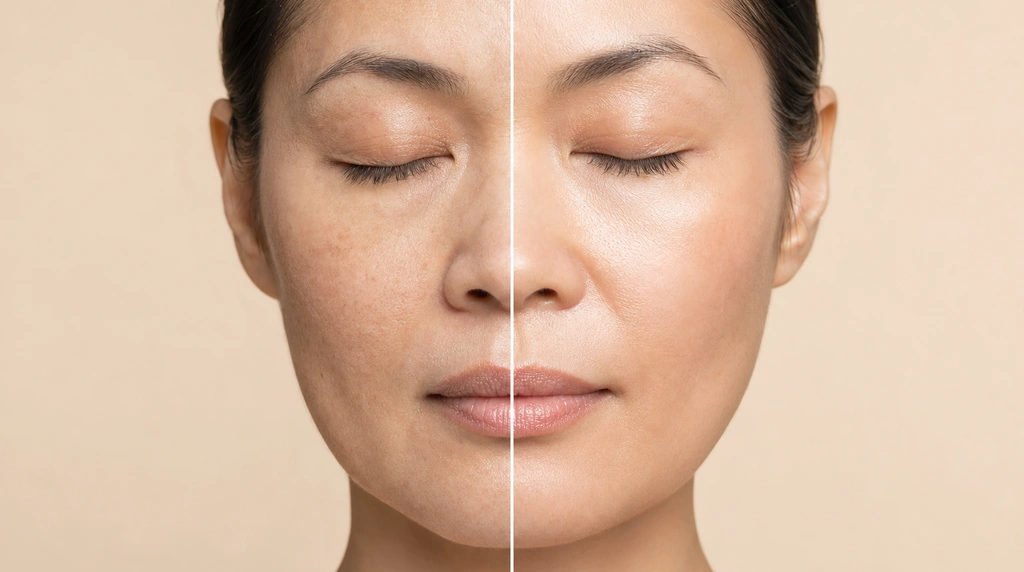
That night I stood under the harsh light of my bathroom mirror and really looked. Dull. Tired. A grayish cast that no highlighter could fake its way around. The kind of face that made people ask if I was coming down with something.
And it wasn't for lack of trying. My shelf held a vitamin C serum, two retinol creams, a peptide moisturizer, and an exfoliating acid I was almost afraid of. I layered them in the right order, every night, the way the tutorials said to.
And nothing changed.
My skin still looked flat under office lighting. Still washed out in photos. Still tired by 3pm no matter what I'd applied the night before. I felt twenty years younger than my face looked on a bad day.
Then a friend, not a dermatologist, not an influencer, just a woman my age who always looked lit from within, told me something that changed how I thought about all of it:
"It was never about what you put on your skin. It's what's happening underneath it."
She explained that serums and creams can only sit on the surface. The dullness I was fighting starts deeper, in the cells themselves, where free radicals from stress, screens, poor sleep, and everyday sun exposure wear things down from the inside out. No cream reaches that.
"You've been polishing the surface," she said, "not fixing the source."
Then she reached into her bag and pulled out a white and burgundy pouch of softgels. Astaxanthin, she called it. The strongest natural antioxidant on the planet.
"This is what changed my skin. It works from the inside, where the damage actually starts."
1. The pigment algae make to survive the sun. And why they call it "Sunglow"

The pouch was Rovina Astaxanthin 12mg Softgels. Astaxanthin is the deep red pigment that Haematococcus pluvialis microalgae produce to survive intense UV and stress. When their water dries up and the sun beats down, the algae flood themselves with this pigment and wait it out. That built-in survival trick is why Rovina calls the effect "Sunglow."
Each daily dose delivers Astaxanthin 12mg from Haematococcus pluvialis microalgae, carried in organic coconut oil for absorption, and it's non-GMO, gluten-free, soy-free, and third-party tested every batch.
The numbers are what stopped me. At neutralizing free radicals, astaxanthin measures roughly 6,000x stronger than Vitamin C, 800x stronger than CoQ10, and 550x stronger than Vitamin E. I read that three times. My whole skincare shelf was built around vitamin C, and here was a molecule thousands of times stronger at the exact job I'd been paying it to do.
Rovina appealed to me because it wasn't another thing to smear on top of my skin. It works where the dullness actually starts: astaxanthin is both water and fat soluble, so it can anchor across the entire cell membrane and support cells from the inside, all over, not just on my face.*
The simplicity helped too. No ten-step routine, no waiting between layers. A few softgels with meals and I was done.
2. Week one: nothing. And nobody tells you that part

Results may vary from person to person
Here's the part every glowing review skips: for the first week, nothing happens. I ordered a pouch, took my softgels every day, and waited.
Day one felt like taking any other supplement. Day four, the same.
By day seven I was checking the mirror every morning, looking for something, anything, and finding my same tired face looking back. I texted my friend a draft complaint: "I don't think this one is doing anything for me."
I never sent it. Instead, I went back to the research that had convinced me to try it in the first place.
"It sounds silly when I say it now," I admitted to my friend weeks later, "but that night decided the whole thing."
What I found is that the quiet first stretch is completely normal. Astaxanthin has over 70 peer-reviewed human clinical studies behind it, and they point to the same pattern: the antioxidant activity begins at the cellular level long before anything shows in the mirror.*
Most people notice their first changes at the 3 to 4 week mark, not the first week. The studies describe weeks one and two as the foundation phase: the molecule is working, and most people feel no dramatic change yet.*
Nobody puts that on the label. If they did, I think fewer people would quit at day ten the way I almost did.
So I kept going. Two softgels in the morning, two in the evening, every day, and I stopped staring at the mirror waiting for a miracle. I marked day 21 on my calendar and told myself I'd judge it then.
Turns out I didn't have to wait quite that long.
Somewhere around the end of week two, something small shifted, and it caught me completely off guard.
3. Four softgels, two meals, and the first flicker of change

Before I get to what changed, the routine itself, because I had questions about the dose. Rovina's protocol is 4 softgels daily: 2 in the morning and 2 in the evening, each with a meal that contains some healthy fat.
The split matters, according to Rovina.
Astaxanthin is fat soluble, and your body can only absorb so much of it at once. They compare it to watering a plant: pour too much at once and most of it runs off. Split the dose across two meals with healthy fat, and more of it actually gets in.
It's also why the softgels are made with organic coconut oil rather than a dry powder. Fat-soluble molecule, oil-based carrier. That answered my biggest supplement gripe before I could even raise it: the "it never absorbs anyway" problem is exactly what this formulation is built around.
In practice the routine took no thought at all. Two with breakfast, two with dinner. And then, near the end of week two, I caught the first real sign that something was happening.
It was a Thursday, after one of those long screen-heavy workdays that usually leaves my face looking flat and drained. I glanced in the mirror expecting the usual. My skin looked less dull than it should have.*
I want to be careful here, because I'd been burned by enough products to distrust my own hope. Maybe it was the light. Maybe I'd slept better than I thought.
But it kept happening. The next few mornings I looked less tired than I felt I had any right to, and that grayish cast I'd stopped noticing seemed a shade fainter.*
Nothing dramatic. Nothing you'd point at across a room. But enough to make me pause.
This lines up with the research timeline, which puts the first subtle changes at weeks 3 to 4. I was seeing the very front edge of it.*
It was the first morning in a long time that I felt hopeful about my skin instead of resigned.
4. The Morning Everything Started to Shift
Results may vary from person to person
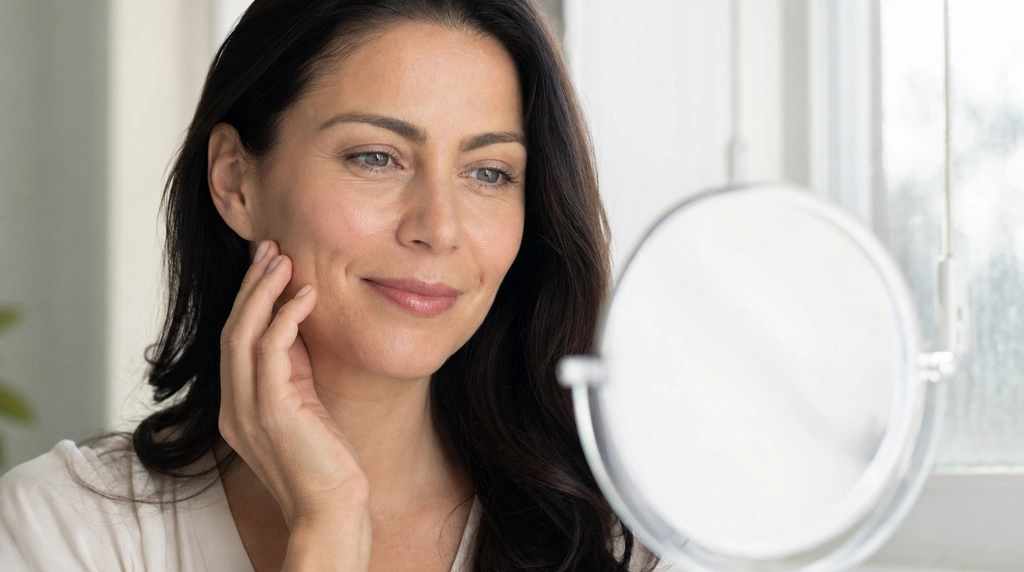
The shift didn't announce itself. Somewhere around day 18, I caught my reflection while brushing my teeth and stopped, because my skin looked bright before I'd put anything on it.
Then it kept happening. Mornings where I looked rested even after a short night. Long screen days at work that used to leave my face grey and flat by evening, except now it wasn't.* The closest I can get to describing it is that my skin looked lit from within instead of lit by the bathroom bulb.
"Is that just my skin?" I said it out loud, alone in my bathroom, leaning into the mirror. "No highlighter. Nothing on it yet."
My husband noticed too. He asked if I'd been sleeping better, which made me laugh, because he had no idea I'd started taking anything at all.
Then came the moment that surprised me most. Day 21, a Saturday coffee run. I never leave the house without at least tinted moisturizer and concealer, because bare skin under harsh cafe lighting was not something I did. I grabbed my keys, caught myself reaching for the makeup bag, and left it sitting on the counter.
I ordered my coffee completely bare-faced and didn't think about my skin once.
"It's just a coffee run," I know. "But I had not left the house without makeup in years. That morning I simply forgot to care."
That same week, two different people asked me what I'd changed. I stopped reaching for concealer on weekends. That alone felt like a real shift.
Because that is the deeper reason women my age keep spending money on skincare. Not for the pleasure of owning another bottle. For relief from that quiet, sinking feeling when your face starts looking more tired than you actually feel inside.
That was the first thing Rovina gave back to me, the sense that a real change was still possible.
5. The Moment Others Started Noticing...

Through week four, the glow stopped being something only I could see. My skin tone looked more even. The tired look around my eyes had softened.* Friends I hadn't told anything started squinting at me on video calls.
Around day 24, I had dinner at my sister's place. She sees me all the time, so she is the last person on earth to hand out compliments.
"Your skin looks amazing. What are you doing?" she asked, tilting my chin toward the window light like I was twelve again. Nobody had said anything like that to me in longer than I can remember.
And I was wearing zero makeup that night. My skin just looked healthy on its own.*
"That was when it stopped feeling like wishful thinking," is the honest way to put it. "It wasn't just me squinting at my own mirror anymore. Other people could see it."
The comments kept coming after that. A coworker asked what foundation I'd switched to (none). My mom said I looked "fresh," whatever that means. And here's the part I never expected: by the end of week four, my eyes felt less wrecked after a full day on screens. I'd close my laptop at six without that dry, strained heaviness I had assumed was just part of working life now.*
Those comments mattered because nobody guessed I was taking anything. They just said I looked like myself, only less tired.
Which was exactly what I wanted.
That dinner is when I decided to write this piece. Nobody asked me to. I did it because I spent years buying serums and creams that promised this exact feeling and never delivered it, and I know how many women are stuck in that same loop. If a few softgels a day did what an entire shelf of skincare could not, other women deserve to hear about it.*
"Looking glowy wasn't even the whole point," if I'm honest. "Feeling like my face finally matched how much energy I still have was."
So if you're wondering why a stranger is telling you about her supplement routine, it's simple. That glow people kept mentioning is the reason I wrote this.
6. Why One Softgel Beat Everything on My Skincare Shelf
Here's what I found when I finally dug into the research. Most serums and creams are mostly water. They sit on the surface of your skin, evaporate, and never reach the cells where dullness starts. I had spent years treating the top layer while the problem was underneath it the whole time.
Astaxanthin works from the opposite direction: within.
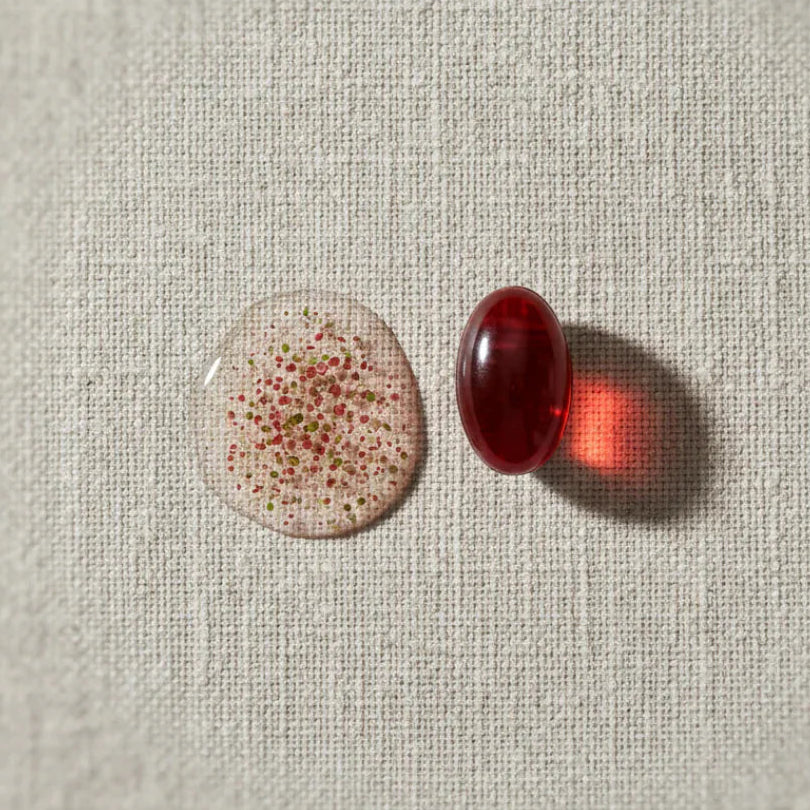
Each Rovina softgel delivers a 12mg clinical dose of astaxanthin from Haematococcus pluvialis microalgae, the pigment those algae produce to survive intense UV and stress. There are more than 70 peer-reviewed human clinical studies behind it. Here is what convinced me, in plain terms.
Cellular Defense*: Free radicals from sun exposure, screens, stress, and normal aging chip away at your cells from the inside, and that damage shows up as fatigue and dull skin. Astaxanthin neutralizes them, and it has been measured at 6,000x stronger than Vitamin C, 800x stronger than CoQ10, and 550x stronger than Vitamin E at doing exactly that.
Whole-Cell Coverage*: Most antioxidants are water-soluble, so they only protect one side of your cell membrane. Astaxanthin is both water and fat soluble, which lets it anchor across the entire membrane and protect both layers. It even crosses the blood-brain barrier, something no other carotenoid does.
Real Absorption: This was my big hangup, because I'd been burned by supplements that pass straight through you. Astaxanthin is fat soluble, so it needs oil to absorb properly. Rovina delivers the full 12mg dose in organic coconut oil inside each softgel, which means it reaches your cells instead of going to waste.
Compounding Benefits*: Most people notice the first changes in 3-4 weeks, with benefits peaking around weeks 6-8. And unlike topicals, which stop working the day you stop applying them, this kind of cellular protection builds with continued use instead of fading.
Instead of layering more products on the surface and hoping, you take your softgels with meals and let the protection work at the cellular level while you get on with your day.* Two with breakfast, two with dinner. That's the whole routine.
Real Women, Real Results.
Since I first posted about my 30 days with Rovina Astaxanthin, other women have written to me with stories that sound a lot like mine.* A glow that someone else noticed before they did. Energy that held up through the afternoon slump.* Most of them said some version of "I assumed it was hype and now I'm annoyed it wasn't."
That is the kind of result I trust. Not a before-and-after shot with studio lighting. Just those small moments when your reflection starts looking a little closer to how you still feel inside.

Results may vary from person to person
"I'm 73 and I work hard at keeping fit, so I pay close attention to what my body responds to and what it ignores. Within a short time on these softgels I could see a difference in my skin, and I could feel it in my energy.* I'm continuing with the program because I want to see how far it goes. Honestly, the extra energy alone would keep me reordering.*"
Lynette P.

Results may vary from person to person
"I just feel better since I started taking it. And either my eyes are playing tricks on me, or my skin has this warm, healthy color it didn't have before.* I keep checking in different mirrors to make sure I'm not imagining things. My husband says I'm not. It's amazing to me that a little softgel did what my expensive creams never managed."
Melissa L.

Results may vary from person to person
"I could feel the difference within a few weeks. My energy is steadier through the day, I bounce back from workouts faster, and my skin has a natural glow I didn't have before.* I've quit more supplements than I can count because I never noticed anything. This is one of the few I've actually stuck with."
Emily R.
Where to get the real 12mg dose (and what the current offer includes)

Results may vary from person to person
Here's the catch I promised. Astaxanthin got popular, and the knockoffs followed. A lot of what's sold under that name is synthetic (made from petroleum, not algae) or underdosed at 4mg, a third of what the clinical research actually used. If you buy one of those and feel nothing after a month, that isn't astaxanthin failing you. That's the wrong product.
The studies behind everything I described in this article used 12mg of natural astaxanthin from Haematococcus pluvialis microalgae. That's the dose Rovina Astaxanthin puts in every daily serving, sourced from the actual microalgae. The brand sells exclusively through its official website, which lets them control quality on every batch and back each order with a 90-day guarantee.
At the time of writing, first-time customers can claim:
- ✅ Up to 67% off Rovina Astaxanthin introductory pricing (not available in retail)
- ✅ Buy 1 Get 1 FREE, Buy 2 Get 2 FREE, and Buy 3 Get 3 FREE bundle deals (Buy 3 Get 3 includes free shipping)
- ✅ 90-Day Money-Back Guarantee: if it doesn't do for you what it did for me, you can request a full refund. No questions asked.
Most people notice the first changes in 3-4 weeks, and the benefits peak around weeks 6-8, well within the 90-day guarantee window*. That guarantee matters because it means you get a full two months to judge the results before the refund window even gets close to ending.
👉 CHECK AVAILABILITY - GET ROVINA ASTAXANTHIN »Why Rovina keeps selling out

Since word started spreading, Rovina has been getting a lot of attention from people who want the real clinical 12mg dose instead of the underdosed versions on store shelves. There's also a bottleneck the brand can't rush: every batch is tested by an independent lab for purity and heavy metals before it ships, which limits how fast they can restock when demand spikes.
If the promotion is still live when you click through, you may still be able to lock in the bundle deal pricing on Rovina Astaxanthin before the current batch runs out.
I don't usually end articles this way. But thirty days in, I'd never go back, and I'd feel wrong not mentioning that the current pricing won't last.
Click the green button below to check availability and claim your discount on Rovina Astaxanthin while the current promotion is still live.
Update: At the time this article was prepared, the Rovina product page was still showing the promotional offer, low-stock messaging, and the 90-day money-back guarantee. There is no promise that the same discount, bundle availability, or shipping offer will still be there tomorrow. If you have already been considering Rovina, it makes sense to check availability now rather than wait and risk missing the current promotion.